
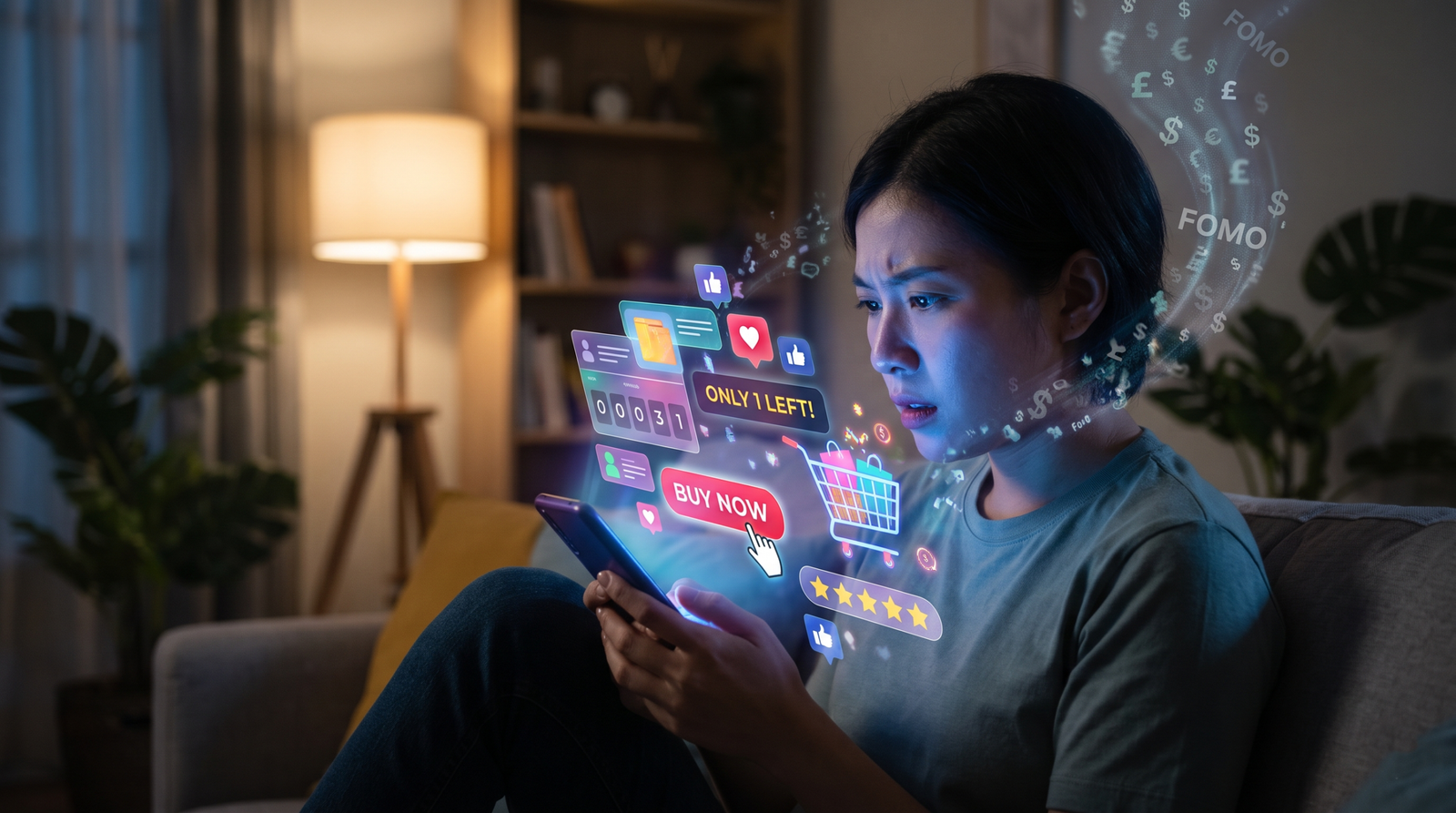
“Digital spending psychology: Algorithms today do not just predict what you want to buy—they actually create the desire before you even realize it. Right now, seamless tech tricks are rewiring how your brain perceives money and convenience. Let us dissect the sneaky digital psychology driving your spending habits and show you how to take back control of your wallet, finally.
The Illusion of Instant Gratification
- The “Buy Now” button: How one-click purchasing bypasses rational thought and fuels impulsive buys.
I realised that when purchasing sites are used, it is easy to make ongoing purchases because there is no need to go to the store; they are arranged and look unique, with discounts attached, and clear layout details that help compare offline purchase prices and spending amounts, like visiting a shop, choosing a product, and buying, which is time-consuming in today’s busy life.
Just one click makes shopping possible in place – office, home, and outside of location; this is an easy process that needs to open a smart device and type items or just click to choose and buy now with a “button”
Our mentality here is: save time for fun, easy to collect, driving time and cost saving, discount on purchase, to compare different shops {e-commerce site}. Varieties of payment options and their discounts; seasonal purchases are heavy whenever there are cultural activities.
- Endless scroll and dopamine hits: The psychological link between social media consumption and retail therapy.
Scrolling is a habit for fun, and finding trends is easy; our ideals and popular personality recommendations, non-marketing or marketing ways that are easy to reach and limited to buy; this is a trigger point in our brain, and we like to purchase when it’s needed or not, no matter.
Because I need to show up with a product first in my hand, to the feeling of ego and the show-up mentality, this is common; when I understand, my purchase is going to wrong , becouse no need at the time, it’s gone!
And the new trend replaces old trendy products. To feature products and an upgraded mentality, our social media hits to consume more than possibilities to look up trendy and different in society.
I seen whenyou follow , 4 person in media like Instagram etc, you like to choose personality and 3 person that match , mindset each other, this is indirect- recomondetion of brain. They actually trigger people to buy products,
- Subscription fatigue: The sneaky way monthly fees accumulate and become “invisible” spending.
I like to buy, but I more like to save big with benefits
I like to watch my favorite movies and TV shows and need to participate as a regular new show watcher, and I like to have small spending using the subscription method; this is a small fee amount charge and makes me feel limited. I have one more device that hits my psychology to watch similar shows on different devices. One more fee: add one to my subscription; similar offers are available in different products; they charge to serve,
This is good and beneficial to connect our favorite show and service but cost look like small , when you calculate – how much cost going one this all subscription then you realise his going to taking my all pocket money.
Behind the psychology is simple – “one purchase, more favorite services” , it’s curies mind to add one continues habitly to suprice self, going to be more subscription.
The Social Proof Trap
- Influencer marketing’s subtle sway: Why we trust recommendations from people we don’t know and spend accordingly.
My spending mentality to buy something: When I meet an influencer while scrolling social media, they offer a limitation, a guide to save, an easy, non-costing suggestion, when compared to our purchases, no experience with products and full benefits,
I don’t like, but I’m excited to buy the product or service “I need inside of brain”, no matter if it’s the right time or not; mindset is simple: buy now, best and big gifts with them, [ it’s price, offer, and win.] I like people because they genuinely represent a service or product; they can save time, what I recommended, like finding the place of products, right budget, no extra pay to suggest, direct redirection, where it’s.
This is one of the options that people like to buy with influencers’ recommendations, but we don’t.
- FOMO and limited-time offers: How scarcity and the fear of missing out accelerate purchasing decisions online.
FOMO stands for “Fear of Missing Out.”
It is a psychological phenomenon—popularized in digital culture and consumer behavior—where a person feels anxious, uneasy, or envious that others are having rewarding experiences, buying exclusive items, or participating in trends without them.
I like this product, but I like to buy at a lower price than my friends; this is a mentality to show off smartness, and another one: the time period is limited, and the offer is valuable according to the price range, etc.
Key Aspects of FOMO:
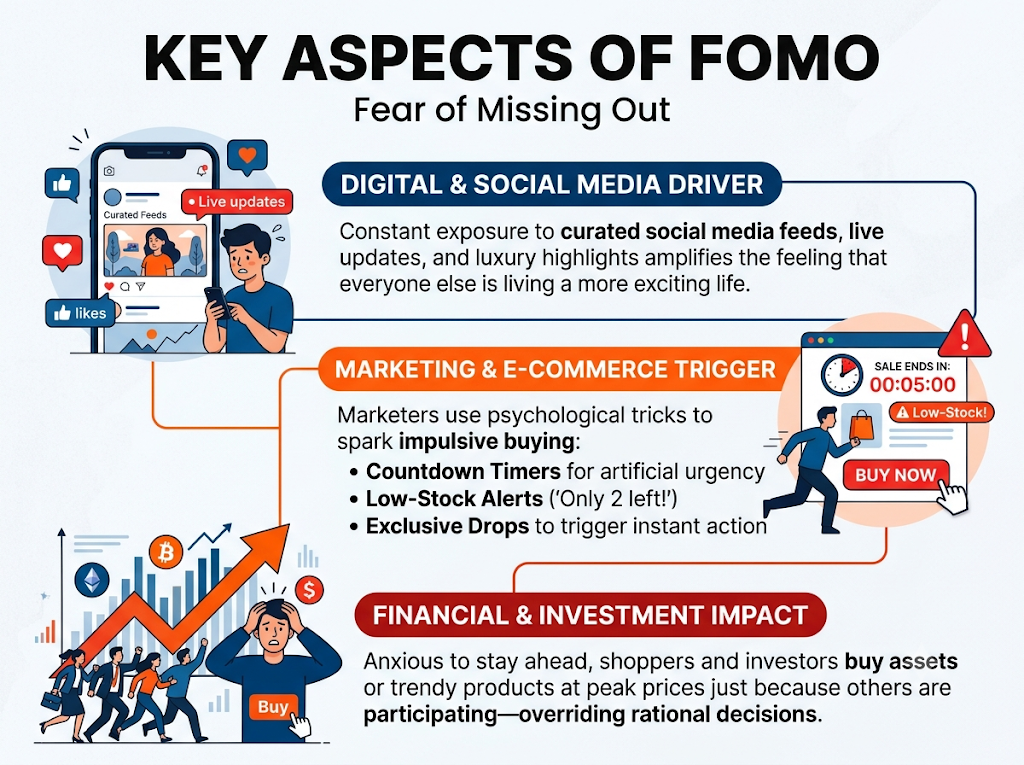
- Digital & Social Media Driver: Constant exposure to curated social media feeds, live updates, and luxury highlights amplifies the feeling that everyone else is living a more exciting life or staying ahead of the curve.
- Marketing & E-Commerce Trigger: Marketers actively leverage FOMO to drive impulsive buying. Common tactics include:
- Countdown Timers: Showing limited-time sale countdowns to create urgency.
- Low-Stock Alerts: Displaying messages like “Only 2 items left in stock!” or “15 people are looking at this room right now.”
- Exclusive Drops: Offering limited-edition product releases that require immediate action before they sell out forever.
- Financial & Investment Impact: In markets (such as stocks, crypto, or hype-driven products), FOMO causes investors or shoppers to buy assets at peak prices simply because they see others profiting or participating, overriding rational decision-making.
- Curated lifestyles: The pressure to maintain a certain image online leads to aspirational, often unnecessary, spending.
Trendy looks and an updated mindset that show up in social profiles: I like to buy! Some people have no money to eat food, but they need to maintain a social profile to highlight their friend zone or around followers; they forcefully buy products without thinking about whether they actually need them or not. For comparison to our life struggle, they need to maintain only trendy icon, that enogh to buy.
It’s common to replace trends.
These habits create a consumer mindset, the best and worst in social media, to impress others, who like me, but I never know the person face to face – but their respect and zone I feel iconic or happy and ideal like security,
My hormones, highly secreted at the moment whenever I get a call -” You are so smart”.
Non-stop, and an ultimately consuming mindset here.
Gamification of Spending
- Loyalty programs and digital rewards: How points systems and badges subtly encourage repeat purchases.
Game of Thrones mindset! This is the best psychology to trigger buy-in and show-up, strength, presence, and ability.
Loyalty programs in games help people level up more than others by offering more benefits, features, or rewards to perform at their best. You call – run of Best.
Offer loop: To cross a level, you have offers [ coins, diamonds, features]; this creates a surprising mindset, encourages more purchases, this loop, bound with low time period, or this is our self-ego happiness in the game to cure and fill the target, smart features and cross levels first in the same game groups.
- The “add to cart” addiction: The psychological high of building a virtual shopping cart, even if abandonment is common.
When I want to buy, I search in a shopping site bar for a product name like “iPhone”, then I compare to other companies according to my budget or offers that play the time. This is a long-lasting wallet where I put likeable products to make finding them easy for future purchases,
Adding products to the cart they – shoping site algorithm recommended similar products with big discounts,
And my mentality is to add more discounts and value to my budget with features, at the time of my money arranging periods,
No money, no matter; I have time to arrange and buy. No burden in finding my product to save safe house using the Add to cart option and proceed.
When I open my smartphone, notifications of applications and offer options, straight forward to buy now, you have wallet full psychology.
- Virtual currency and in-game purchases: The blurring lines between real money and digital tokens lead to overspending.
During gameplay, virtual points and coin spending for features and leveling up with special abilities in-game blindly build real-money spending habits; to regulate real purchases, one real money = 10 digital or virtual coins to play,
These spending habits blindly flow real money into purchases!
Algorithms and Personalization
- Predictive advertising: How AI anticipates your desires before you even realize them, making spending irresistible.
I visit digital content – videos, posts, or mail and click; the data will be saved, like how much time I spend, which describes whether I like this service or Products,
platforms have advertising policies that permit them to collect and share for relative advertising purposes,
That data becomes predictable to buy, and shows you similar products and services with good offers that lead to buying, without creating resistance.
- Echo chambers of consumption: Why digital platforms show you more of what you already like, reinforcing spending habits.
When you buy and spend time regularly, you realise you like similar things then he find out produts nd servicec that you like to consume; this algorithm understands what is your test.
It can recommend similar services to ind you for your purpose – to regular consumers, or purchases that you like through an easygoing process.
The game one is data of use, which describes your habits and likable content that fits to be bought. That is the bidding-proxy algorithm that updates services and products around you.
- Dynamic pricing’s invisible hand: How algorithms can charge different prices based on your browsing history and willingness to pay.
They understand your purchases and history to make their next move, and how much you spend over a period of time, or based on age requirements; they collect data from consumer sites you visit, including your date of birth, your activity searching for products, and the price range you select, one or more times.
Based on what you are expected to buy, a reasonable price range is possible! then he will be run according.
I hope you understand how you can spend, then what is the point to be noted and reclaiming our wallet,
Reclaiming Your Digital Wallet
- The “30-day rule” for online purchases: Implementing a waiting period to combat impulsive buys.
This season, I realise our requirement: this is a good “add to cart” option to help you think about purchases. That amount you have to impulse-buy, add one saving wallet at the period – that helps to build saving habits, but you think about the product.
When you make this rule, you have time to understand your purchase. This period helps you decide whether it is actually recommended or not.
- De-influencing your feed: Actively curating your online environment to reduce exposure to spending triggers.
The plants, will be as per the environment.
Clean your social media: Unfollow influencers and posts that trigger the algorithm to serve you recommended products, and create a more breathable environment to boost productivity.
- unfollow
- Clear browsing history or likes
- Adjust settings per the ad recommendation “settings” option {advertising policy}, etc.
- Digital detox for your finances: Practical steps to audit subscriptions and track invisible spending for financial clarity.
Go to the wallet and delete “Autopay” through your actual recommendation, and track your budget regularly; apply a digital tracker or checklist that can help you track spending habits.
I have free tools where you can build and track your spending. If you feel free, then try out the section ” free tools“
If you like this post, then read the book that is available on Amazon Kindle: Before You Tap, Think